OAX Foundation’s First Hackathon Adventure: HackTheEast 2026 Recap
Last weekend, from February 28 to March 1, 2026, the OAX Foundation proudly sponsored and immersed ourselves in HackTheEast, Hong Kong’s inaugural student-led, city-scale AI hackathon. This event marked our very first hackathon collaboration of its kind, and it proved to be an exhilarating launchpad for nurturing AI talent right here in the city. While taking a pragmatic look at AI in terms of how it’s used for development as well as applications.
A Shared Vision on New Breed of Builders
The experience reaffirmed our shared vision of fostering the next wave of AI innovators by blending cutting-edge technology with decentralized principles, all while stripping away corporate constraints to let genuine creativity flourish. OAX stepped up with sponsorship support and real-world private-sector perspectives that students often miss, while the talented HackTheEast organizers rallied university students from diverse backgrounds across Hong Kong universities, drawing in around 350 participants who formed 60+ teams.
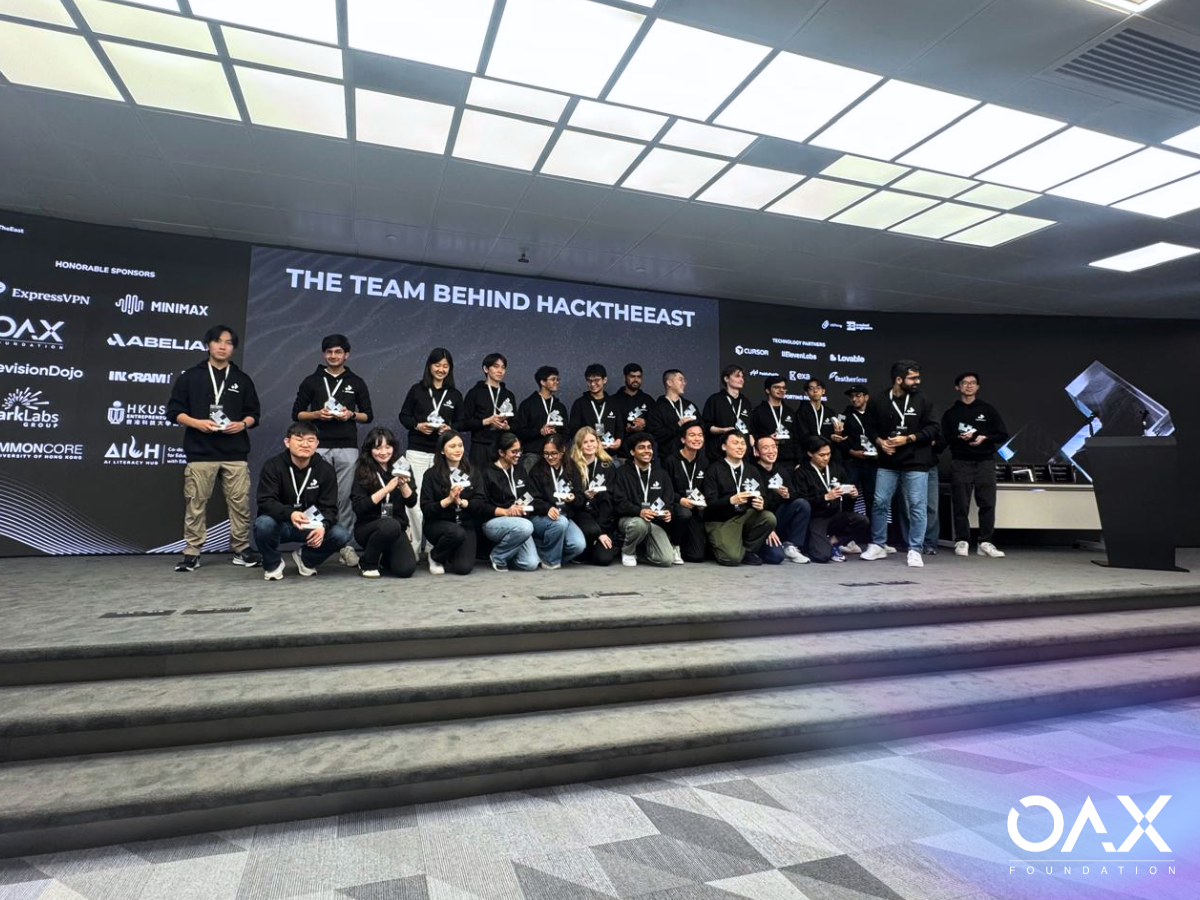
What stood out most was the inclusive spirit: AI innovation isn’t confined to computer science majors alone. We truly valued how participants approached problems, collaborated under intense pressure, and turned ideas into working demos rather than settling for slides or abstract concepts. The focus remained on building tangible solutions capable of addressing real societal challenges, with complete freedom for teams to define what mattered most to them.
Sponsors and Technical Backbone
Prize sponsors brought specialized insights to guide the challenges, including OAX’s emphasis on hyper-learning platforms designed to future-proof skills, especially relevant with our recent supporting project GMAsia Campus that focuses on AI education. ExpressVPN’s priority on children’s online safety, and Abelian’s exploration of privacy solutions with on-chain elements. Technical sponsors like Minimax, Eleven Labs, and AWS provided the essential tools and infrastructure that allowed teams to accelerate their prototyping within the tight 24 hour window, turning ambitious visions into functional realities.
Organizing such an event came with its share of hurdles, from coordinating stakeholders and securing venues to attracting high-caliber talent and maintaining quality, but the payoff was electric. Students poured their energy into projects tackling pressing issues on their own terms, resulting in a wave of creative, demo-ready prototypes.
The Winning Team
Among the many outstanding submissions, we were especially drawn to Team Dyson of the East, who earned the OAX Foundation Award for their project StudyRot. This innovative platform reimagines learning for Gen Z users accustomed to endless scrolling by converting PDFs, syllabi, or study materials into engaging, social-media-style threads reminiscent of X or TikTok formats. Learners get quick, catchy overviews that invite deeper exploration through threaded “replies,” complete with AI-generated hooks like highlighting misconceptions or provocative elements to boost critical thinking and retention.
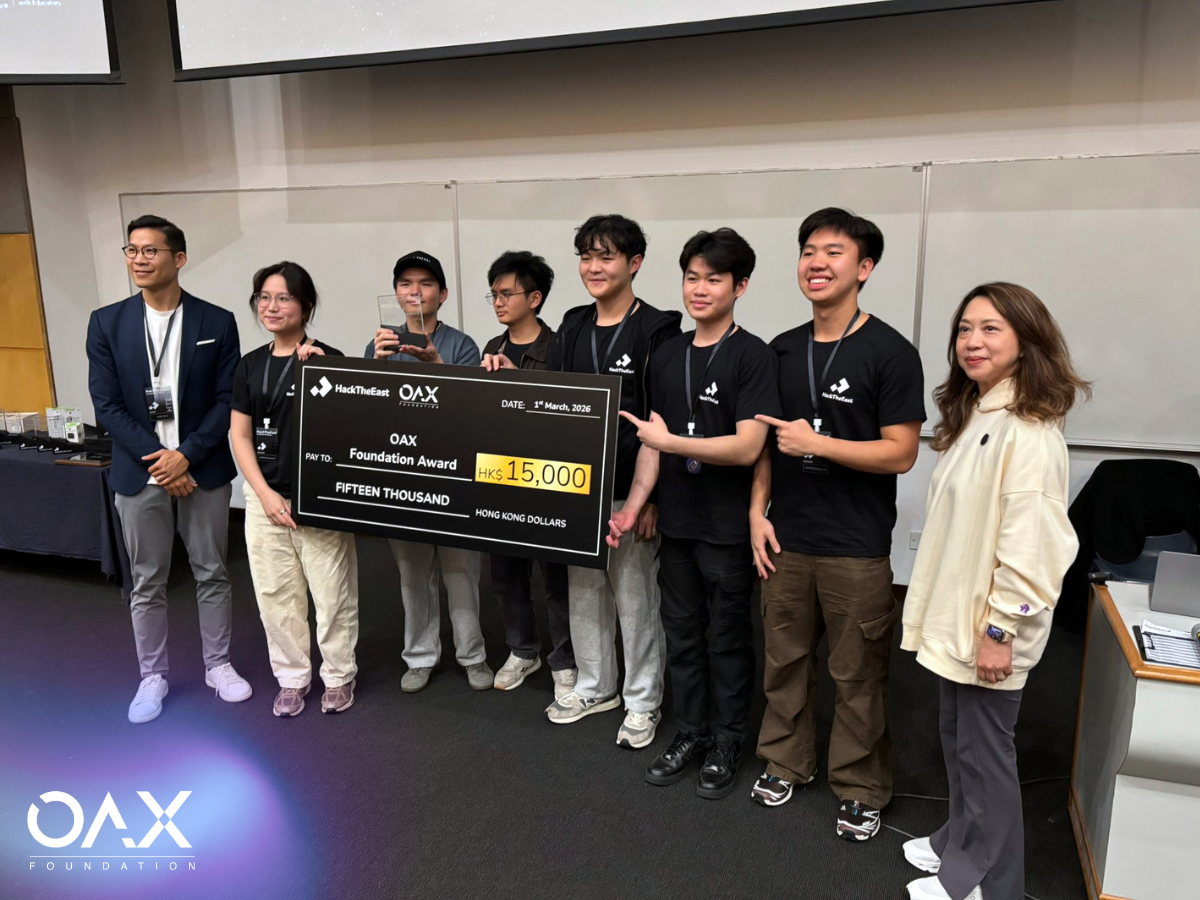
The team’s work shone through a thoughtfully designed system architecture, effective use of retrieval-augmented generation (RAG), and a polished user interface that demonstrated strong execution under time constraints. While the content generation still has room for refinement, their responses during the Q&A revealed a mature, iterative mindset focused on continuous optimization and improvement. This combination of technical capability and forward-thinking approach makes them precisely the kind of builders we want to support long-term.
Noteworthy Project Highlights
Other remarkable projects captured attention as well, such as a platform that teaches “vibe coding” by auditing product performance and offering actionable suggestions to empower non-technical entrepreneurs, a straightforward plugin that demystifies terms and conditions during sign-ups by clearly flagging risk levels, creative uses of attention signals like EEG data to craft maximally captivating educational content, gamified approaches that transform dense material into ADHD-friendly social-media-like experiences, and an on-chain watermarking system for LLM outputs to transparently settle debates over content originality.
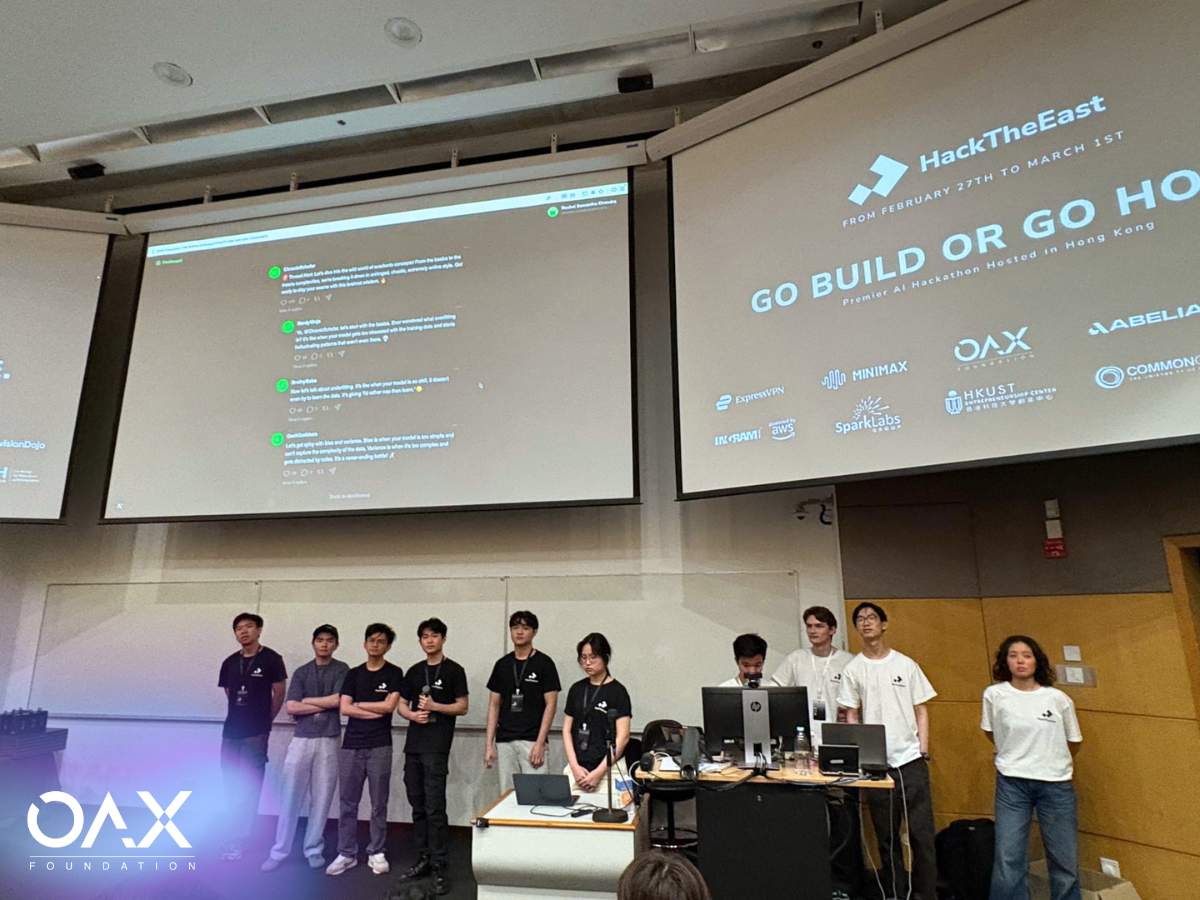
Judging proved incredibly difficult, as so many entries excelled in different dimensions, each presenting compelling problems and unique solutions with impressive clarity and delivery. Ultimately, what impressed us most across the board was the participants’ attitude and mindset, their ability to frame issues thoughtfully, orchestrate AI as a powerful tool rather than an end in itself, and infuse their work with real context and resilience.
AI Development Trends Observed at the Hackathon
Participants demonstrated strong fluency in integrating AI into their workflows, predominantly using Python for core AI/ML logic, agents, and RAG pipelines and JavaScript/TypeScript for interactive web/front-end interfaces. Signaling a clear shift toward AI-augmented development as the new standard for software engineering.
Cursor and Lovable emerged as the most popular tools, especially among teams building in these languages, where 67% of the code from the hackathon was through prompt-driven “vibe coding” method, highlighting that vibe coding is rapidly becoming the future of efficient software creation.
AI chat assistants proved ubiquitous, appearing in nearly every project. Leveraging the power of large language models (LLMs), these interfaces provided seamless, supercharged support, offering code suggestions, debugging help, architecture advice, and more. Their chat-based format remains the most natural and accessible way for users to interact with complex systems.
Taking it further, many teams deployed AI agents running in the background, often combining retrieval-augmented generation (RAG) techniques to enable context-aware, autonomous task handling such as data retrieval, decision-making, or multi-step workflows. Participants were integrating Amazon Bedrock to power these agents, taking advantage of its managed foundation models, secure tool-calling capabilities, and easy orchestration of complex agentic flows, even within tight hackathon constraints.
Looking Ahead
In just 24 hours, these students produced prototypes with genuine potential; with sustained effort over weeks or months, many could evolve into meaningful, scalable products. Giving us insights on how builders leveraged AI to build smart AI applications for users. This hackathon represents far more than a single weekend. It has launched a vital talent funnel for us, opening doors to connect with passionate builders and strengthen the broader AI ecosystem in Hong Kong and beyond.
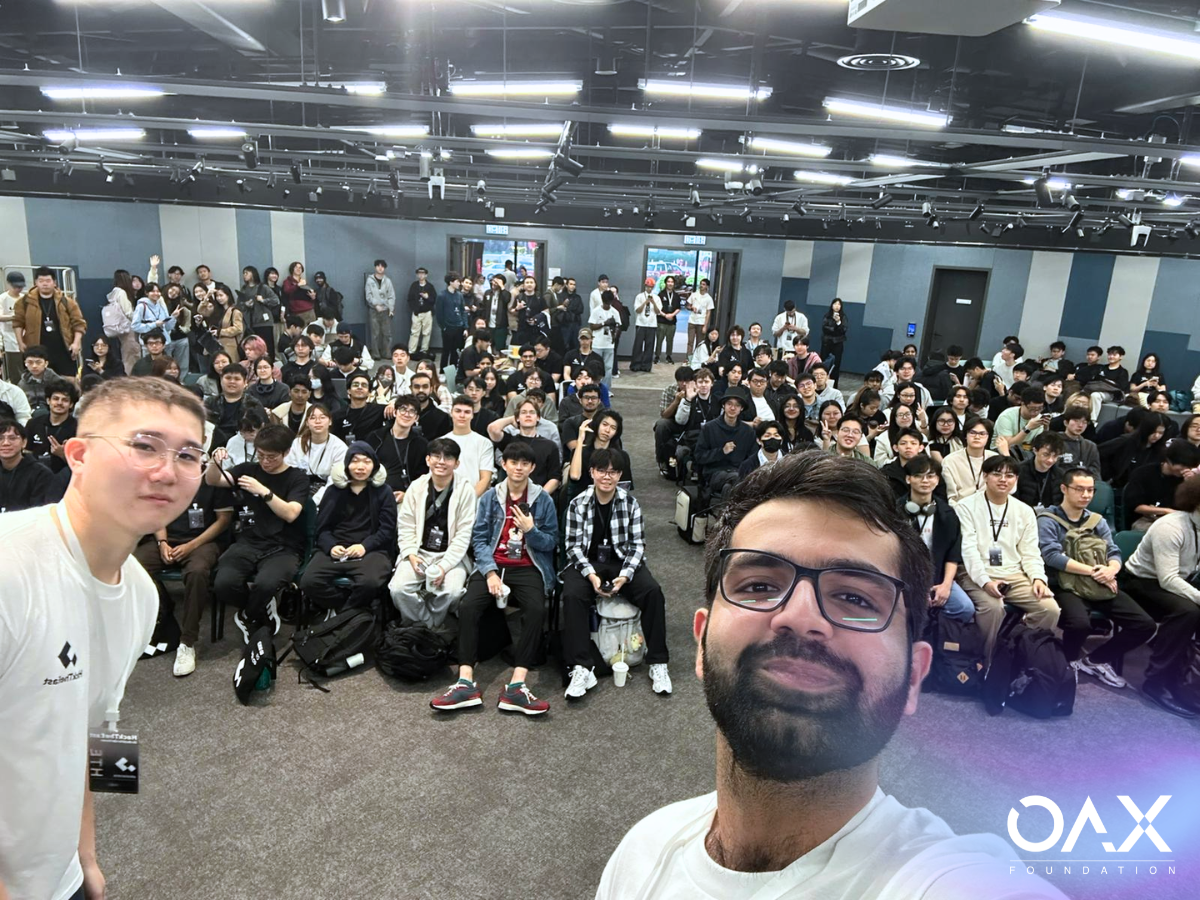
We are already planning dedicated follow-up engagements with the winners and standout teams to explore their ideas in depth, discuss potential convergences between AI and Web3, and identify opportunities for integration with our ongoing ecosystem projects. The HackTheEast experience has energized us, and we see it as the starting point for lasting relationships that will help propel innovation forward in the AI revolution.
To everyone who participated, thank you for the inspiration and dedication. Keep pushing boundaries, we’re excited to continue building alongside you. If your work involves EdTech, AI-driven learning, privacy, or similar high-impact areas, reach out; we’d love to hear more and explore how we can collaborate.
Disclaimer: The above is an opinion piece written by an authorized author, but in no way represents the official standpoint of OAX Foundation Limited, nor should it be meant to serve as investment advice.