The Multi-Model Shift: How Smart AI Teams Are Saving Millions and Working Faster
Market Overview
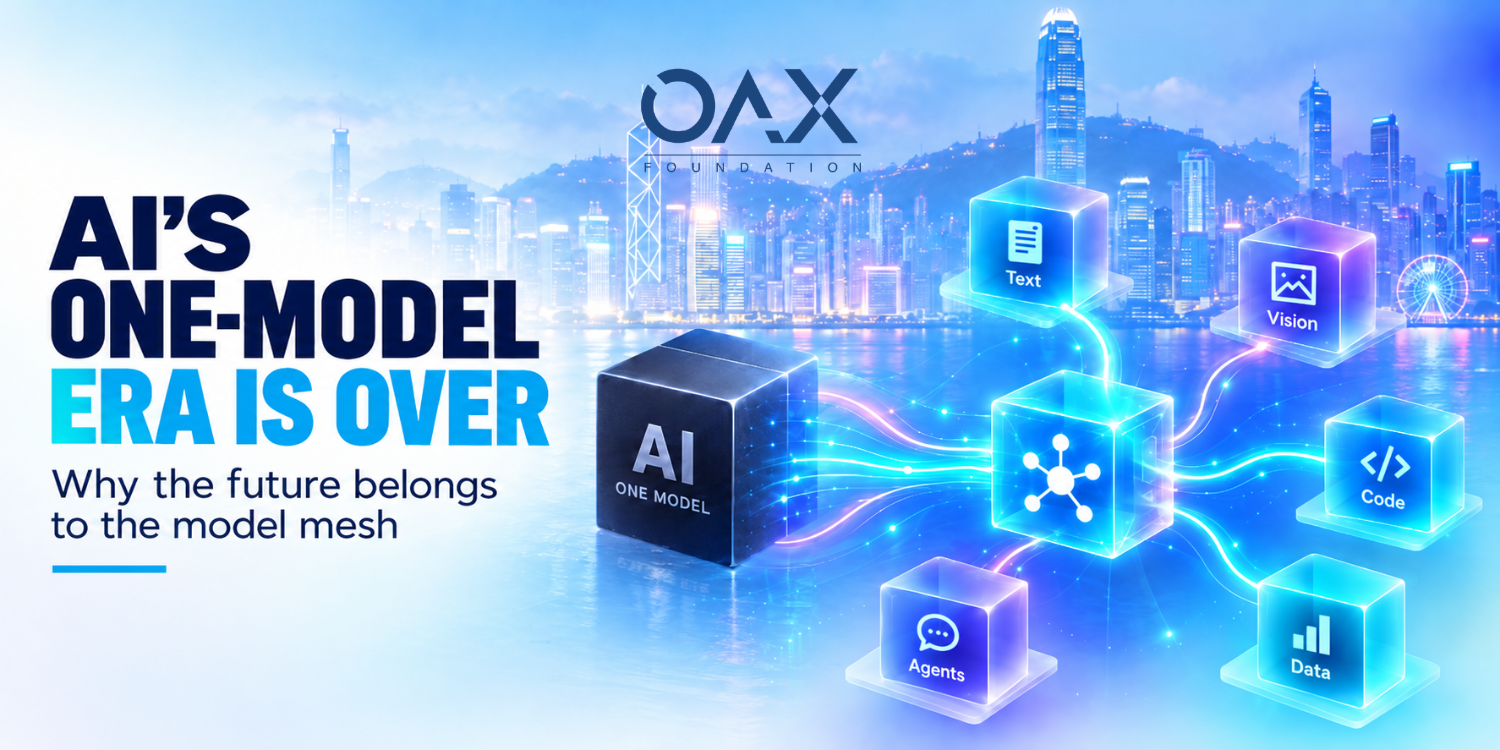
AI’s One-Model Era Is Ending
For years, the AI playbook revolved around a single question: Which model is best? Is it GPT, Claude, Gemini, DeepSeek, or Qwen?
Today, enterprise teams are asking a different question: Which model is best for this specific task?
That shift changes everything.
A top-tier AI model might be ideal for complex financial analysis, but it is unnecessarily slow and expensive for summarizing an email. A lightweight coding specialist will often outperform a general-purpose chatbot on software bugs. And when a cloud provider experiences downtime, businesses cannot afford to let their operations stall.
The industry is moving away from the monolithic “one-model-fits-all” default. In its place is a team of specialists, multiple models orchestrated behind the scenes, with intelligent software trafficking every task to the best-fit AI engine.
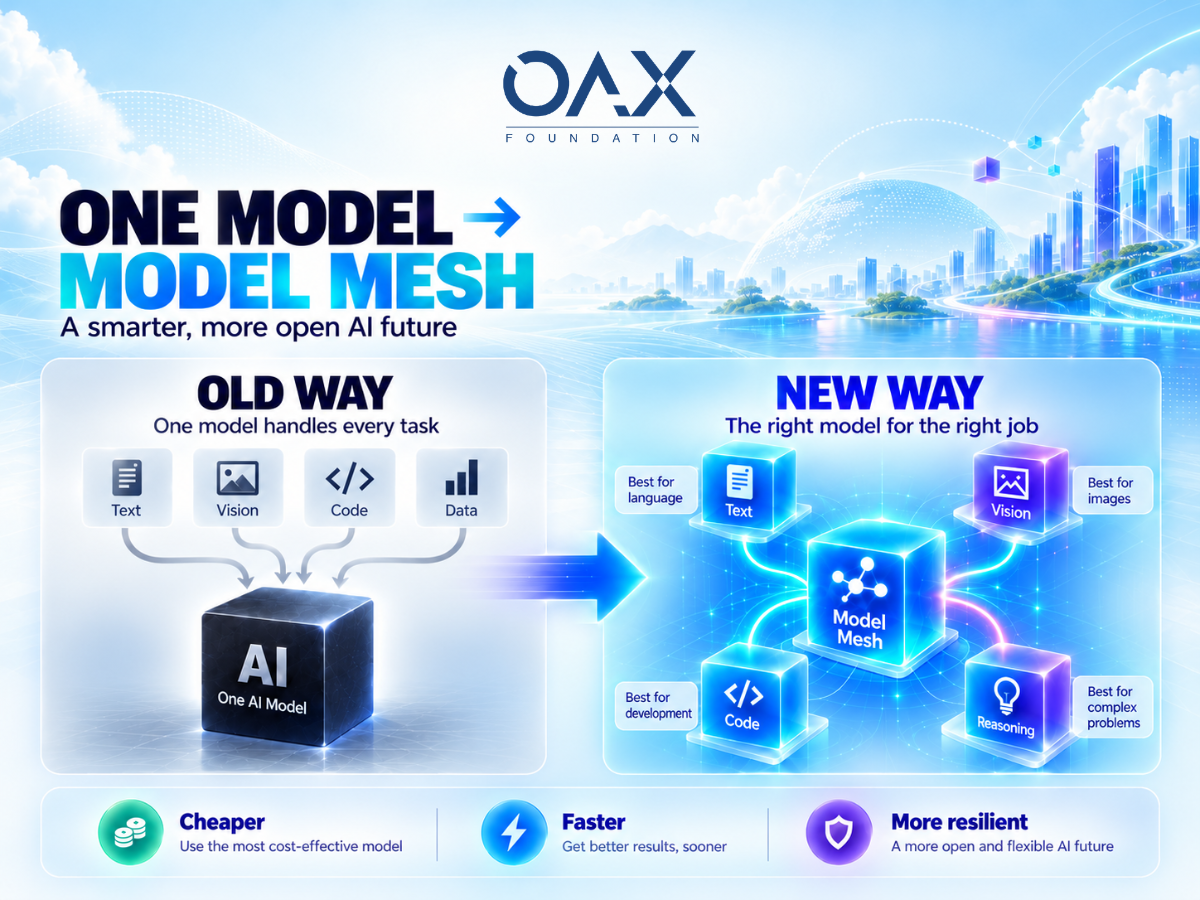
This approach is known as a model mesh: an intelligent traffic controller that dynamically matches each query to the right model based on capability, cost, and speed.
The result? AI systems that can be cheaper, faster and less dependent on any single provider.
What is a “Model Mesh”?
Instead of relying on a single AI model to answer every question, organizations manage their AI using a model mesh, a background system that acts like a smart traffic controller.
When a request comes in, this intelligent switchboard looks at the job behind the scenes and automatically hands it off to the right model for the task:
- Simple tasks (like summarizing an email) go to fast, ultra-cheap models.
- Coding tasks go to specialist software models.
- Complex logic or research goes to top-tier reasoning engines.
The Real Winner: Businesses and Everyday Users
You don’t need to worry about which tech giant wins the AI race. When an organization uses a model mesh, the business and its customers gain three huge advantages:
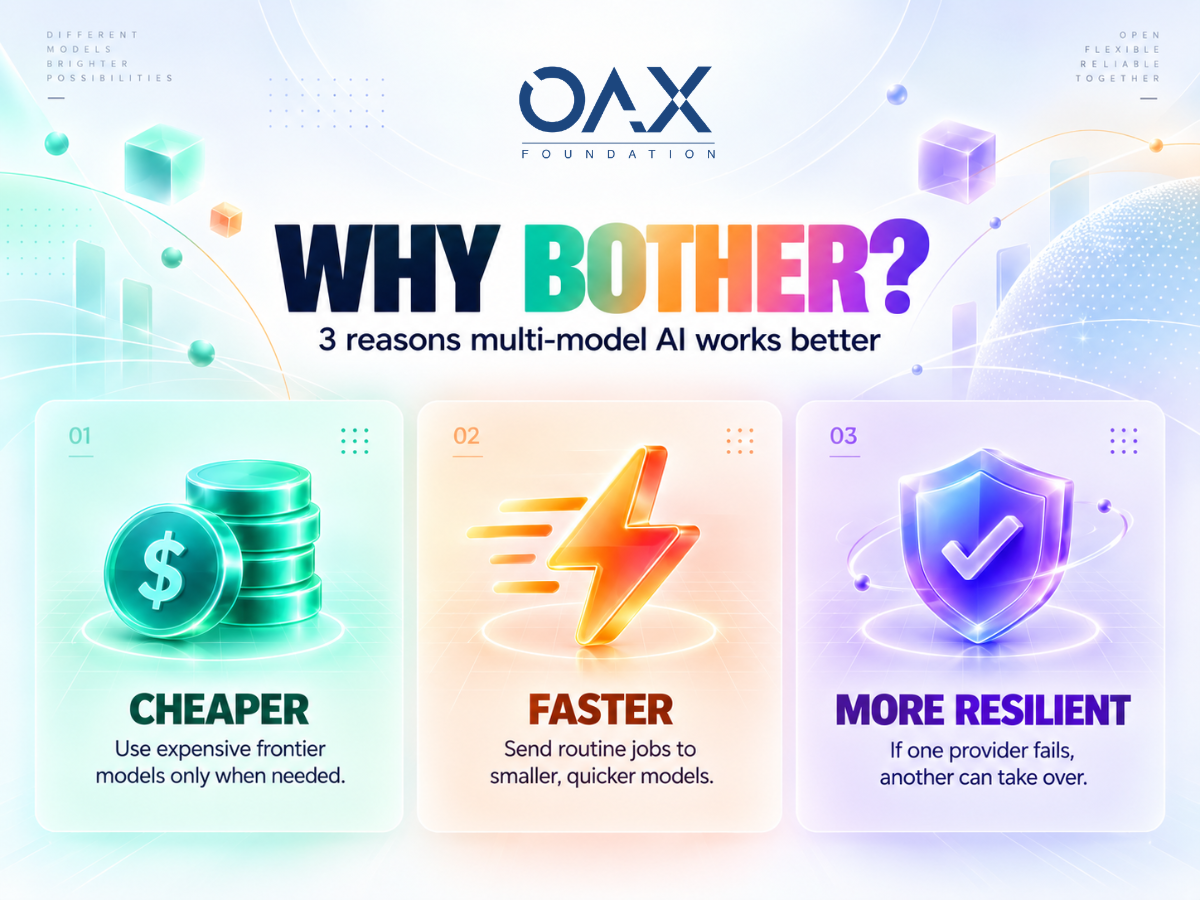
- Lower Operating Costs: Using lightweight models for routine work cuts total AI bills dramatically compared to running every single task through expensive brand-name models.
- Built-in Reliability: If one AI provider goes offline or gets bogged down, the system automatically redirects traffic to a backup model so your apps stay online.
- Plug-and-Play Upgrades: You are never locked into a single vendor. When a better or cheaper AI launches, you can connect it instantly without rebuilding your software.
Trade-offs and Real-World Limits
Smart routing offers major cost savings, but it isn’t always the right choice for every situation.
When One Model Is Still Better: For small projects, quick prototypes, or strictly regulated industries with heavy audit requirements, sticking to a single trusted AI model is much simpler to manage and verify.
Extra System Complexity: Setting up a smart router takes work. You need tools to test quality, track performance, and manage backup rules. If the router adds even a fraction of a second of delay to simple tasks, it can ruin the fast experience for users.
Added Responsibility with Open-Source: Using free, open-source models gives you total data privacy and huge savings, but it also means your team is responsible for testing their accuracy, securing their code, and managing their safety.
How Industry Leaders Apply Model Routing Today
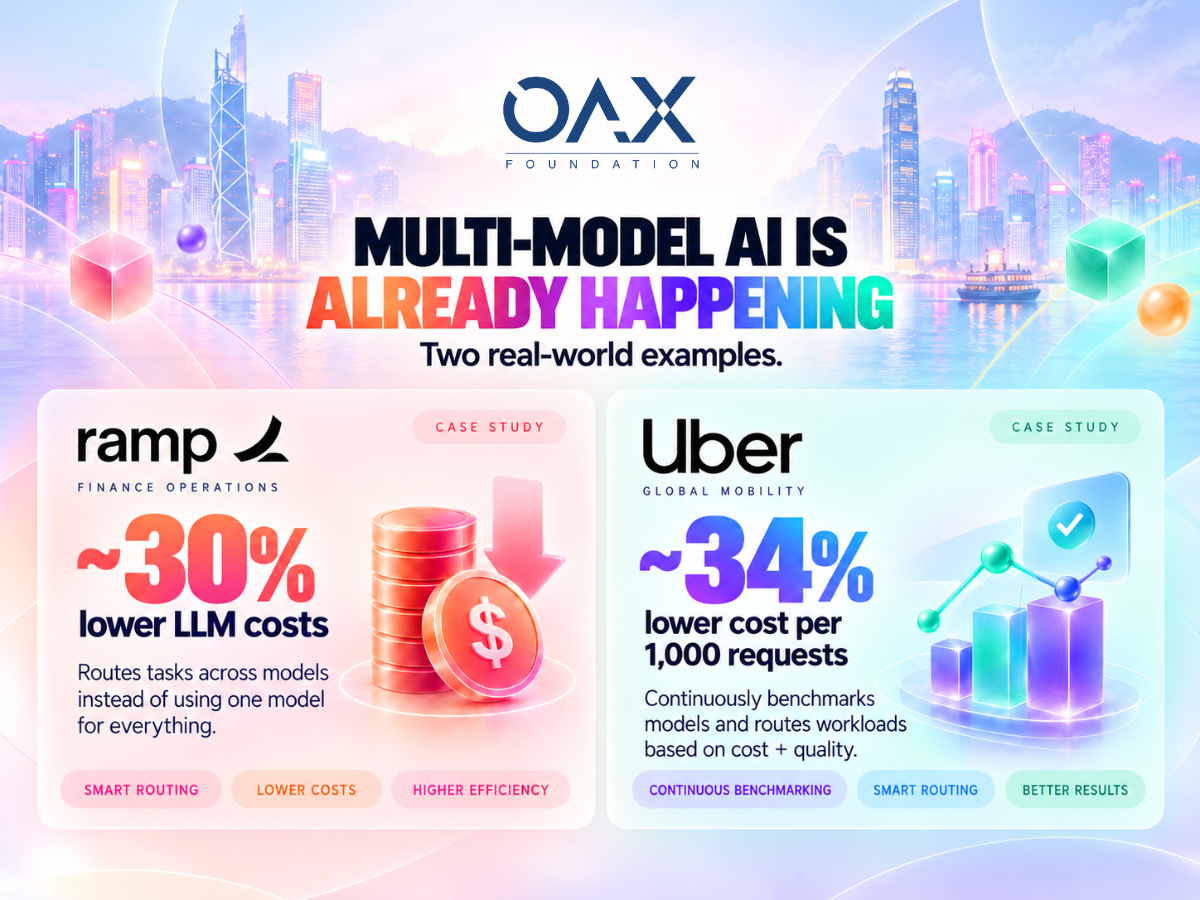
To understand how smart routing works in the real world, consider how companies such as Ramp and Uber run their AI stacks. Instead of forcing one model to do everything, they apply intelligent model selection and routing: routine or scoped tasks are directed to lower-cost or open-weight models, while more complex work is handled by higher-capability frontier models.
This is not just theoretical.
Ramp, for example, has been routing different tasks across different models for years. The result: lower AI costs while maintaining quality and speed. The company has shared that this approach cut its LLM costs by approximately 30% while improving feature quality and speed.
Uber takes a similar approach, constantly testing models against real workloads and choosing the most cost-efficient one that still meets the quality bar. This has helped Uber keep overall AI spend stable even as weekly agent requests grew roughly 9X, with reported reductions of about 34% in cost per 1,000 requests and 52% in cost per session.
The New Skills Gap: From Prompting to Agentic AI Leadership
If AI is becoming an interconnected web of specialized models, a new critical skill in the workforce is emerging.
Knowing how to write a clever prompt may soon be less valuable than knowing which AI tool to use, and when.
The next generation of AI-literate workers will need to compare tools, check quality, manage costs and understand when human oversight is still needed.
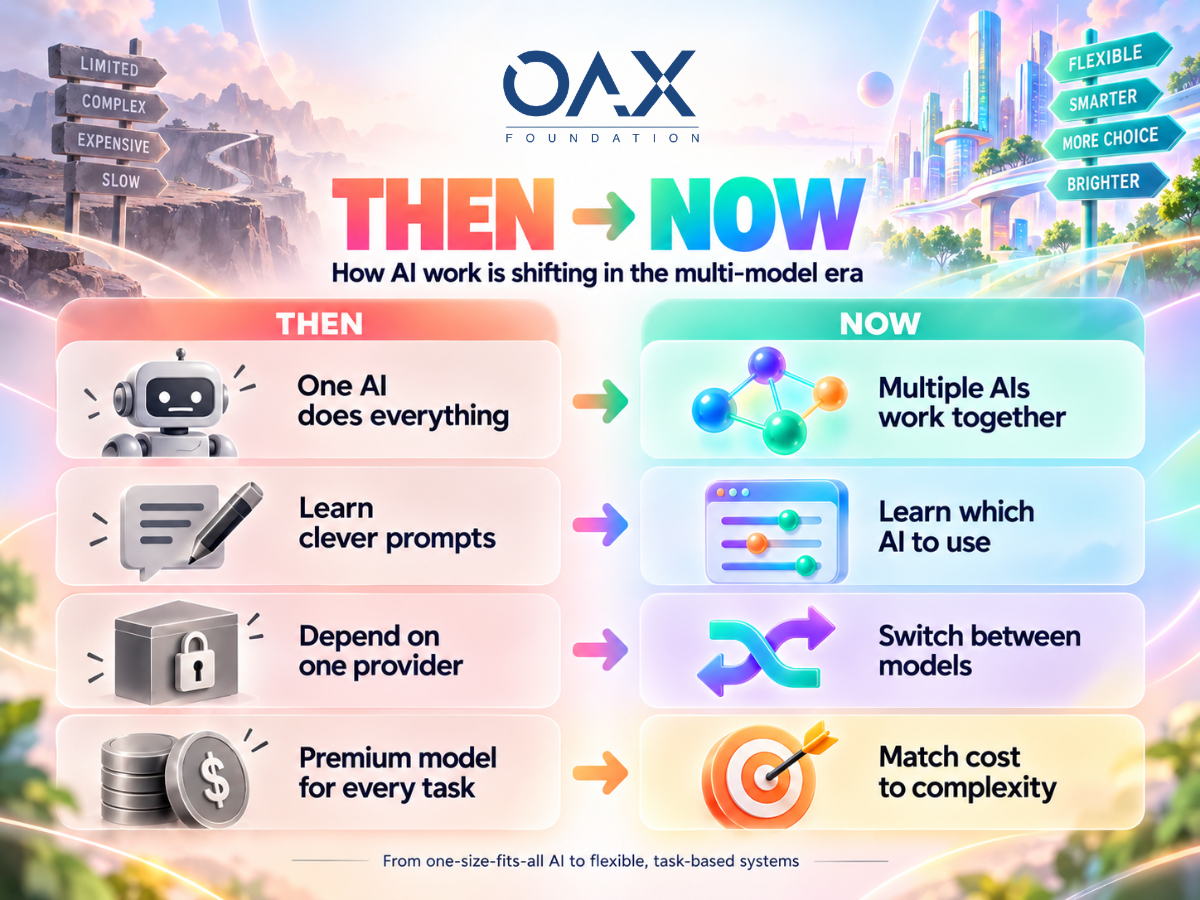
Agentic AI Leadership boils down to three core skills:
- Establishing clear business rules to route tasks between fast and powerful models.
- Constantly measuring outputs to ensure lower-cost models maintain high quality.
- Governing multi-step AI systems so they execute automated workflows safely and accurately.
Hong Kong as the Global Innovation Testbed
This shift may be especially relevant for Hong Kong.
The city sits between global and mainland Chinese technology ecosystems, which means businesses here are more likely than most to encounter a mix of Western, Chinese, proprietary and open AI models.
In that environment, the competitive advantage may not come from choosing one ecosystem. It may come from being able to work across all of them.
Looking Ahead: Building the Workforce of Tomorrow
Navigating the next decade of AI won’t be about picking a “side” or pledging allegiance to a single model provider. It will be about building interoperable systems and training talent to handle dynamic multi-model environments.
At OAX Foundation, supporting this transition is core to our mission. Working alongside GMAsia and community initiatives like local student hackathons (including Hack the East), we are actively supporting regional education and talent development.
Through GMAsia Campus, we deliver free, accessible, and practical AI education designed to help learners and professionals across Asia cultivate an adaptive, agentic mindset.
By mastering model orchestration and system design, the next generation of builders, professionals, and organizations across Hong Kong and Asia can turn technological complexity into a lasting competitive advantage, delivering efficient, high-performance AI for everyone.
Disclaimer: The above is an opinion piece written by an authorized author, but in no way represents the official standpoint of OAX Foundation Limited, nor should it be meant to serve as investment advice.