May 2026 Community Updates
Hi OAX community,
The market in April bounced, May held steady. Equity indices hit all-time highs, and underneath the headlines, something more structural arrived: AI agents stopped being a promise and started shipping as products. That shift is what this month is really about.
Markets: three things drove the rebound
The recovery had real fundamentals, not sentiment, not a squeeze. Corporate earnings and AI momentum. ~84% of S&P 500 companies beat estimates in Q1 2026. Profit margins hit a record ~13.4%. AI capex is no longer speculative, it’s showing up in revenue. Investors noticed. Geopolitical uncertainty between US and Iran remains, the Strait of Hormuz dialogue continues to be the year’s most persistent tail risks. Markets refocused on fundamentals in the resilient U.S. economy. Consumer and business spending held. Fed easing expectations provided a floor. Inflation stays a watchpoint, but the base case improves.
For Blockchain: Bitcoin consolidated above key structural levels after pulling back from its 2025 ATH. Dominance sits at ~60% , firmly Bitcoin Season. The lag versus equities is real, but institutional accumulation via spot ETFs continues quietly. The rails are being laid.
Geopolitical: Trump–Xi, stability as the outcome
The May 14–15 Beijing summit was Trump’s first visit to China since 2017. No comprehensive deal, but stability itself was the deliverable. Xi called 2026 a potential “historic, landmark year.” Both sides agreed on a framework for economic cooperation and tariff de-escalation signals. Markets read it correctly: this was a floor, not a ceiling.
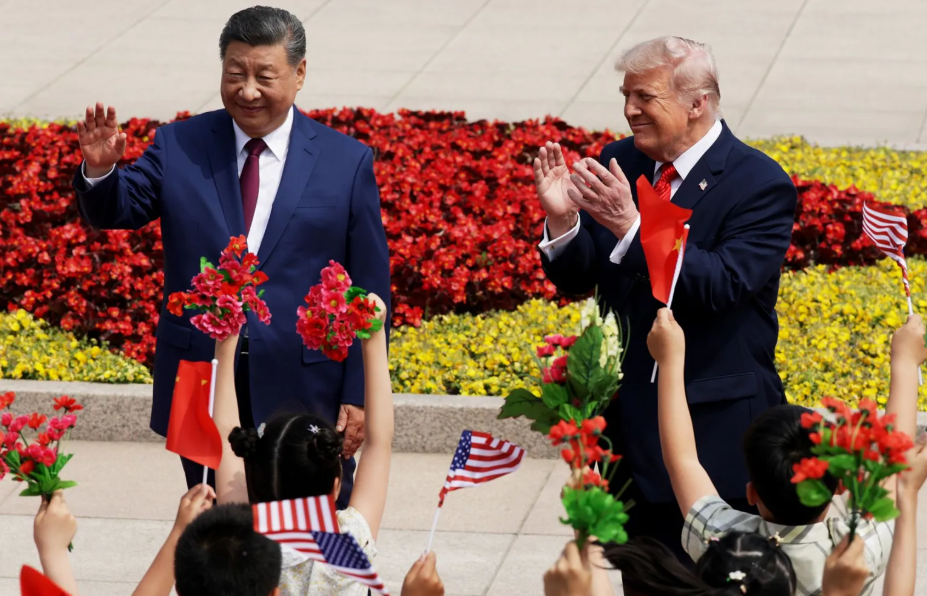
Source: BBC
The more important signal for our community: AI was formally placed on the diplomatic agenda for the first time. Both governments agreed to open a government-level AI dialogue. The Stanford 2026 AI Index puts the US lead over Chinese models at just 2.7%. Two superpowers in a dead heat, and they’re now talking about guardrails.
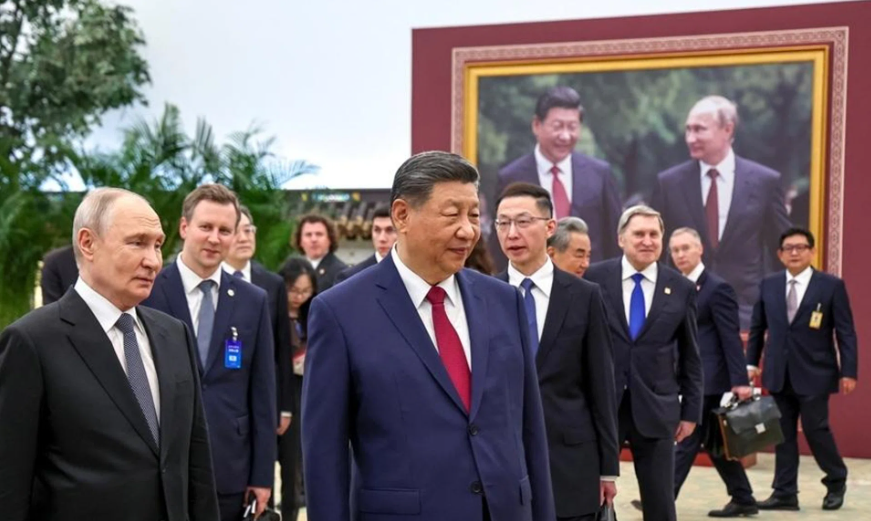
Source: Reuters
Just days after Trump left Beijing, Putin arrived, his 25th visit to China, marking 30 years of the China-Russia strategic partnership. Within weeks, Beijing also hosted Pakistani PM Sharif and Serbian President Vucic.
Hong Kong: TechFest and the enterprise AI moment
On May 21, Tech Fest Summit 2026 brought 2,000+ senior tech leaders to HKCEC, and the agenda read like a blueprint for where enterprise AI is actually landing.
Three panels stood out. The first: AI in financial services, featuring CTOs from HKEX, WeLab Bank, and Octopus Holdings debating how to scale AI responsibly while staying inside regulatory guardrails. The second: AI and robotics across sectors, HSBC, Unilever, and Gammon Construction sharing real-world adoption and where governance hasn’t caught up with the technology. The third, and most relevant for where we’re heading: Agentic AI reshaping customer experience and enterprise structure, the conversation shifting from automation to AI agents that actively redesign how organisations operate.
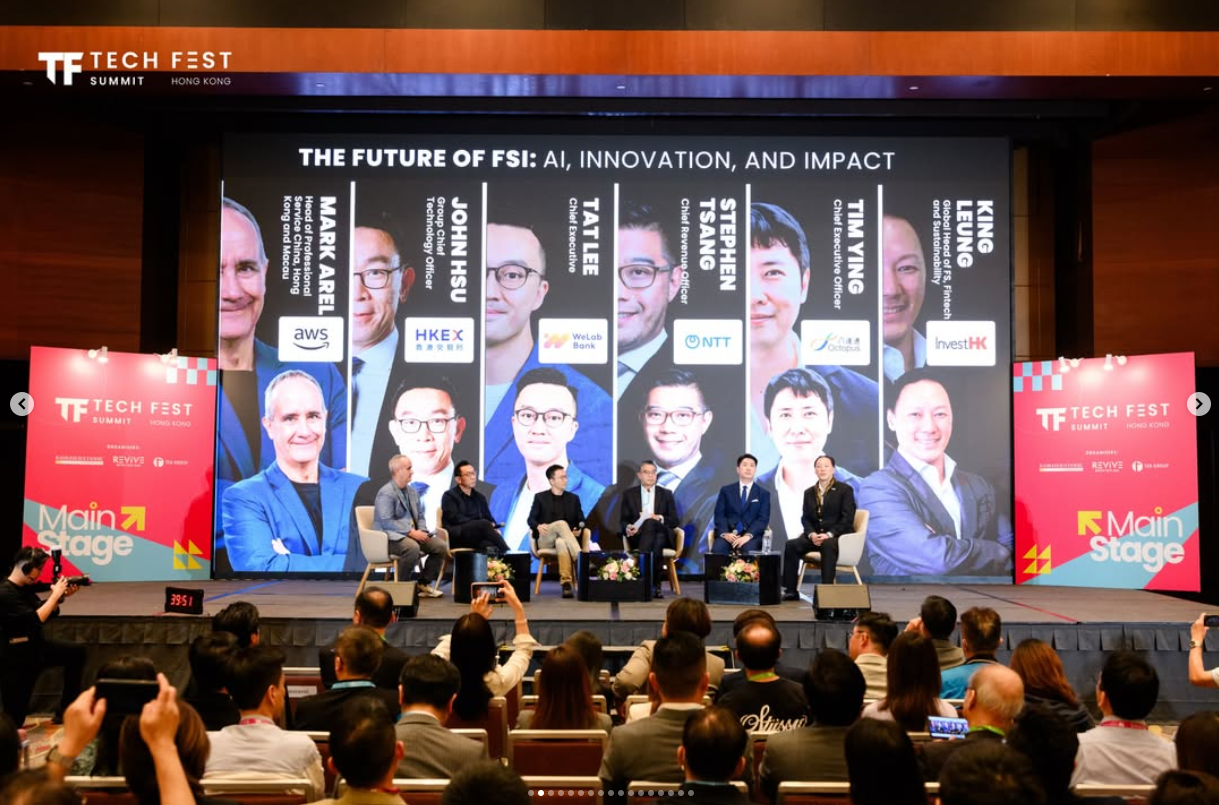
The signal from Tech Fest wasn’t the technology itself. It was the room. CTOs, COOs, and digital executives from Hong Kong’s largest institutions, not startups, not researchers, working through how to deploy AI at scale, today. Hong Kong isn’t waiting for the agentic economy to arrive. Its enterprise layer is already building into it.
AI didn’t just get smarter- it got a body
This month, we also managed to visit the World AI Device Expo 2026 & 7th Shenzhen Global AI Expo (GAIE), and the energy was electric. Over 400 exhibitors, 70,000+ attendees, and 30,000㎡ of cutting-edge hardware proved one thing: the next chapter of AI is physical, personal, and profoundly human-centered.
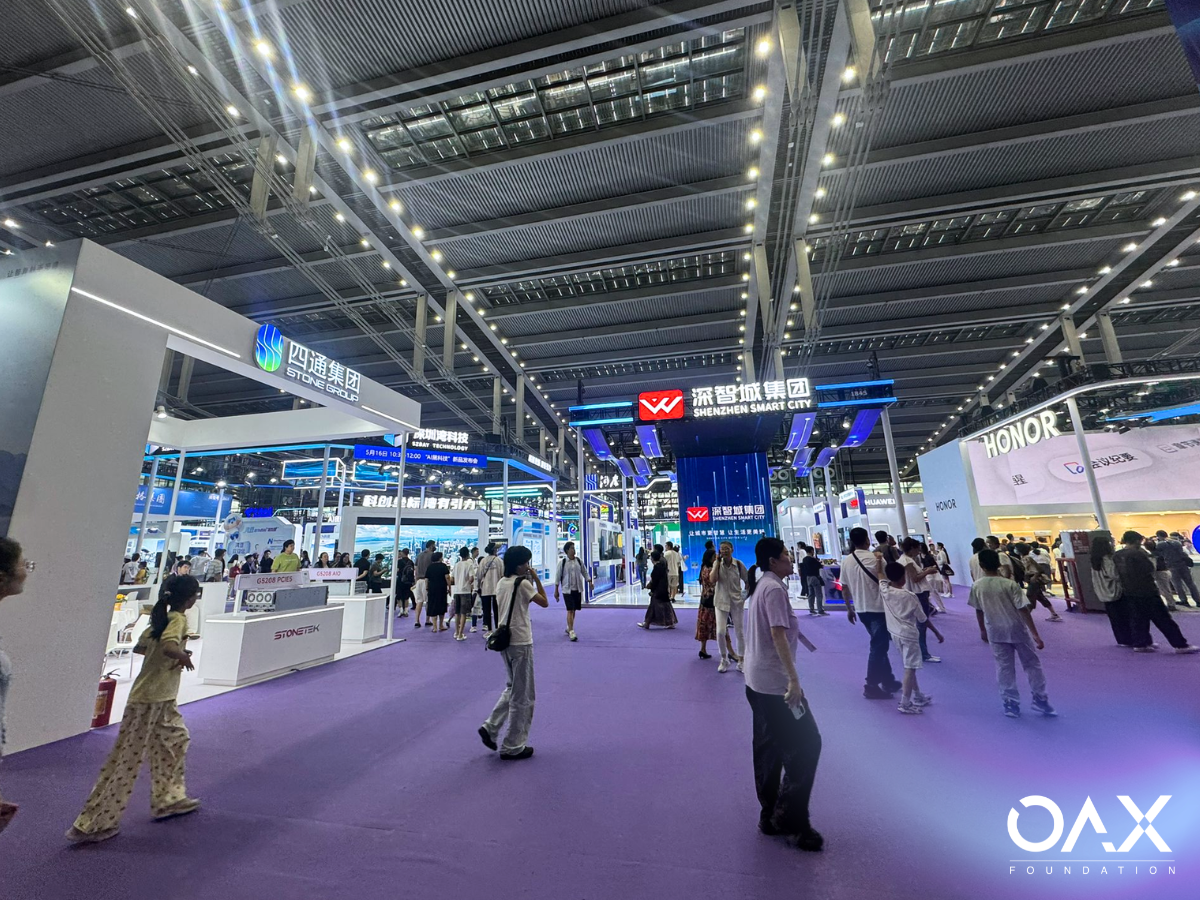
This expo wasn’t just futuristic robot demos, it was a glimpse into coexistence. Companies like Honor showcased their humanoid robot that won a half-marathon in Beijing this month, X Square Robot announced their new-generation home cleaning robots, and Tencent Robotics X and Futian Laboratory open sourced RoboFusion, a new robot body interconnection architecture designed to accelerate collaborative robotics development.
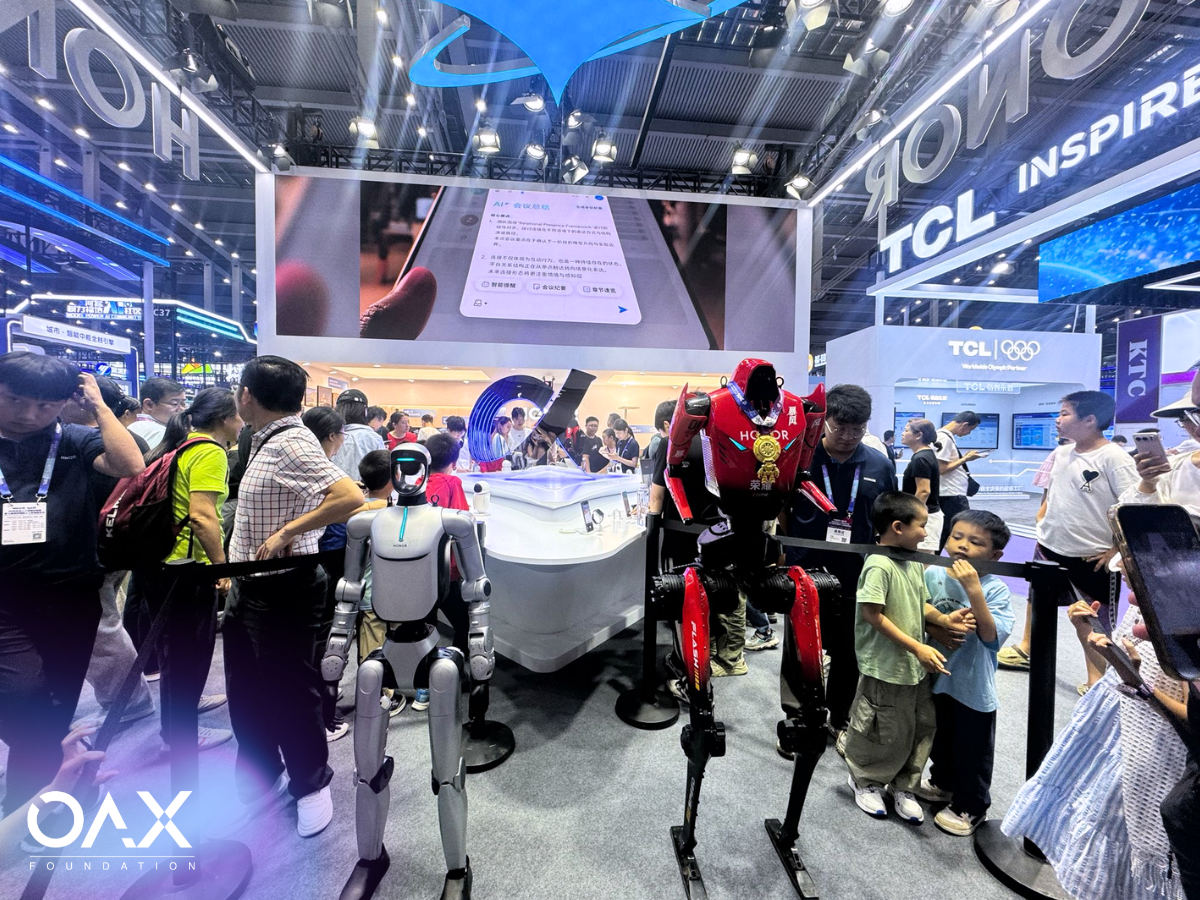
Events like GAIE remind us that technology’s highest purpose isn’t just capability, it’s a meaningful blend of connection, empowerment, and human flourishing.
The agent economy: May was the month it shipped
At Google I/O, Google unveiled Gemini Spark, not an update, a direction shift. Proactive AI embedded deep into Android, executing multi-step tasks across apps without being asked. AI that acts, not just responds.
Rivian rolled out an onboard AI assistant for Gen1 and Gen2 EVs, context-aware, generative, woven into the driving experience. Amazon launched an Alexa+ powered AI shopping assistant directly in its search bar, automating e-commerce without the user lifting a finger.
Three companies, three industries, one month - the same move: AI that waits has become AI that acts. This is the early infrastructure of a new economic layer, one running on autonomous agents that handle tasks, execute decisions, and mediate between humans and systems.
The question is no longer whether this economy arrives. It’s what it runs on, who owns the infrastructure, and what the rules are. That question is where OAX has always operated.
Foundation: the bottleneck isn’t builders, it’s knowing what to build
AI is collapsing the skills barrier. Anyone can ship now. We are heading toward 10x the current number of capable builders globally. But it surfaces a constraint capital and tooling can’t solve: direction. When anyone can build, the scarce input is knowing what’s worth building. What problem deserves solving? What does the agent economy actually need?
The OAX Foundation’s work is increasingly focused here, not just funding, but orienting. Helping builders understand the landscape they’re building into.
GMAsia is our most concrete effort in this direction. An AI-powered platform connecting Blockchain and AI communities across Asia through events, news, and education, it’s a knowledge transfer engine built for exactly this moment. The gap between “I can build” and “I know what to build” becomes the most important gap to close. The team has also adopted AI agentic features to power the platform, elevating the user experience.

Another update on GMAsia: The team has also been working on their AI News section, which has just gone live. The feature is very much in development mode and the team is still working on improving the experience and quality of news for users, but nevertheless, we are excited about their progress and hope you will also follow their journey.
The long game: AI + decentralisation as the backbone
The agentic economy isn’t just software. Robots, autonomous vehicles, AI-managed infrastructure, machines that act, decide, and coordinate at scale.
As that economy grows, it will need what centralised platforms can’t credibly provide: trustless infrastructure. Open, verifiable, permissionless systems where no single company or government sits in the middle. That’s decentralisation’s role, not as an alternative to AI, but as its complement. AI is the intelligence layer. Decentralisation is the trust layer. Together, they are the backbone of the economy being assembled around us.
This is the Foundation’s long game. Supporting builders who understand both sides. Building a community where this convergence is happening most deliberately. Backing projects like GMAsia that accelerate the knowledge transfer this moment demands.
The new economy is being built. We intend to be in the room , and to make sure the builders who will define it are too.
Reach out, share your vision, and let’s build together.
Disclaimer: The above is an opinion piece written by an authorized author, but in no way represents the official standpoint of OAX Foundation Limited, nor should it be meant to serve as investment advice.