Hong Kong Spearheading Asia’s AI initiative
China’s 15th Five-Year Plan: The AI+ Imperative and Hong Kong’s Strategic Window
China’s newly unveiled 15th Five-Year Plan (2026–2030) marks a decisive shift. Unveiled in early March 2026, the plan elevates AI to the organizing logic of industrial transformation, with a dedicated AI+ action plan that embeds artificial intelligence across manufacturing, services, governance, science, and daily life.
Core targets include growing digital industries to 12.5% of GDP, sustaining R&D spending growth above 7% annually, and achieving “decisive breakthroughs” in foundational technologies including chips, algorithms, data infrastructure, multimodal models, agents, and embodied intelligence.
The plan explicitly calls for exploring pathways toward artificial general intelligence while prioritizing rapid, economy-wide diffusion, moving AI from consumer novelty to industrial backbone.
Implications are immediate and structural.
For Hong Kong, the message is clear: national momentum in AI+ creates both alignment pressure and a once-in-a-generation opportunity. As an international financial, innovation, and talent hub with privileged access to the Greater Bay Area, Hong Kong is positioned to translate mainland-scale compute, data, and policy ambition into globally competitive, application-first AI deployment.
Hong Kong’s AI+ Response: Strong Foundations, Focused Upskilling
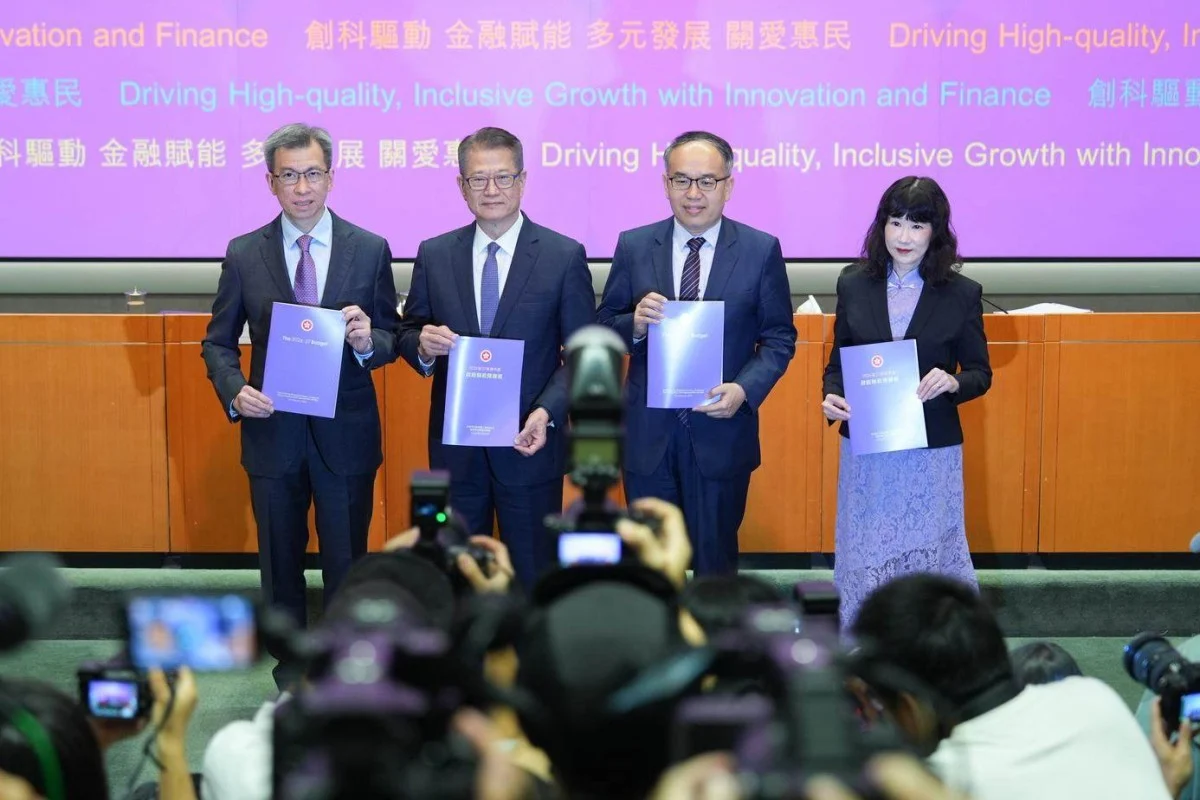
Hong Kong has moved swiftly to align. In the 2026 Budget and recent policy addresses, the government launched the Committee on AI+ and Industry Development Strategy and the flagship “AI Training for All” initiative, explicitly targeting students, the working population, and the wider community.
The Vocational Training Council (VTC) is embedding AI across all programs under its “AI+Professional” banner, while universities are rolling out new AI-related undergraduate courses. Public investment in AI literacy, supercomputing capacity, and cross-border talent pipelines signals a deliberate bet on the next generation.
Hong Kong’s AI Readiness Paradox: Graduates Are Ready, Enterprises Are Not
Hong Kong already ranks among global leaders in AI preparedness. Top-tier in UNCTAD’s infrastructure, data, and skills pillars; 4th globally in IMD World Digital Competitiveness 2025. Digital literacy is high, attitudes are adaptive, and young talent is AI-native.
Yet enterprise adoption tells a different story.
- McKinsey research (early 2026): Nearly 70% of white-collar workers in Hong Kong use AI, with over 90% engaging daily. Only 14% of executives report frequent use. The leadership gap “really slows enterprise adoption,” because employees need visible reinforcement from the top.
- HKPC “AI Readiness in Workplace Survey 2025”: AI adoption approaches 90% across local companies, but the biggest barriers remain talent shortages, lack of internal expertise, training, and data governance. Classic symptoms of organizations that have tools but not strategic leadership capability.
- Broader reports confirm the pattern: companies invest in technology but under-invest in translating productivity gains into sustained business outcomes or leadership fluency.
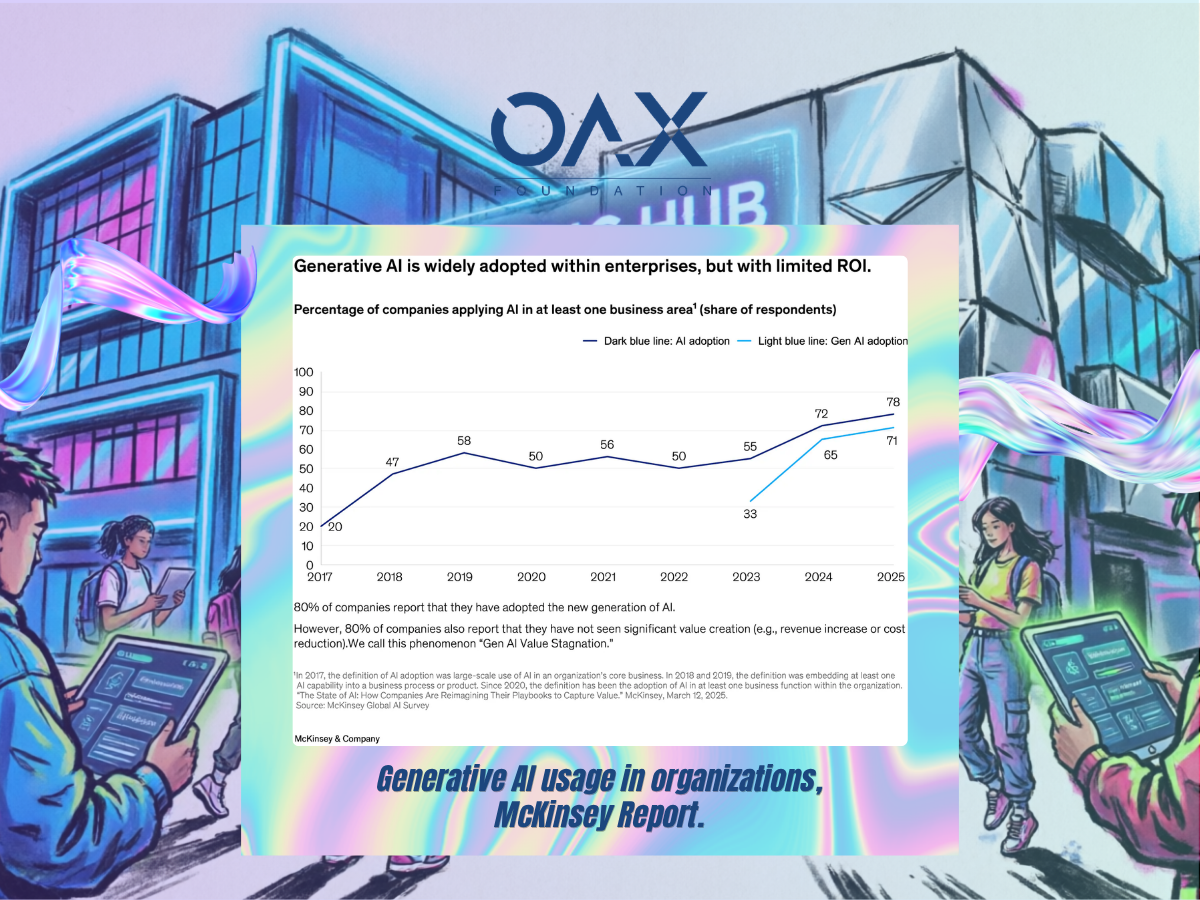
Graduates enter the workforce AI-ready. Enterprises, particularly their decision-makers are not yet. This is the critical bridge that must be built now.
The Decisive Lever: Today’s Decision-Makers
China’s AI+ push and Hong Kong’s parallel investments mean the window is narrow. Enterprises that treat AI as a junior-employee productivity tool will fall behind those whose C-suite and mid-level leaders can strategically direct AI agents, redesign workflows, govern data, and translate national-scale momentum into competitive advantage.
The gap is not technical infrastructure or youthful talent, it is executive fluency in agentic AI, design thinking for AI systems, and the ability to balance opportunity with risk at the leadership level.
This is precisely where GMAsia comes in.
GMAsia was purpose-built for this moment. As an enterprise-focused AI education and leadership platform, developed in partnership with the OAX Foundation, GMAsia moves beyond generic “AI literacy” to deliver agentic AI leadership training for today’s decision-makers. Partnering with ecosystem players, and a network of tech practitioners, GMAsia aims to make a practical impact in this AI revolution.
Its programs are grounded in:
- Deep understanding of AI strengths, limitations, and strategic application.
- Design-thinking frameworks for real-world deployment.
- Practical pathways that equip C-suite and senior teams to lead AI transformation, not just endorse it.
- Learning platform to scale AI strategy and literacy across organisations. Through targeted AI thought leadership, GMAsia helps Hong Kong enterprises close the readiness gap, align with national and local AI+ momentum, and turn policy ambition into measurable enterprise performance.
Call to Action for Hong Kong Leaders
China’s 15th Five-Year Plan has set the direction. Hong Kong’s government has laid the foundations. The missing piece is not more graduate talent or more compute, it is enterprise leadership that is AI-fluent today.
Decision-makers who act now, investing in their own fluency and their teams’ strategic capability, will define the next decade of Hong Kong’s competitiveness. Those who wait risk watching AI-native graduates and mainland-scale AI+ momentum pass by them.
GMAsia stands ready to bridge that gap. The infrastructure, policy tailwinds, and young talent are already in place. The only question is whether today’s leaders will step up to lead the transformation, be equipped with knowing AI’s capabilities and reinventing their role within organisations.
Disclaimer: The above is an opinion piece written by an authorized author, but in no way represents the official standpoint of OAX Foundation Limited, nor should it be meant to serve as investment advice.